SysML v2 - The final spurt begins

A lot is currently happening again with SysML, as the initial submission of the standard took place in August. A revised version is expected to be submitted in the middle of next year.
This week there was a virtual meeting of the SysML v2 Submission Team (SST), where the current status was described and in which I participated. Even if it is short notice: Tomorrow (15.10.2020) the one-week Models 20 online starts, where there are a number of events on SysML and other modeling topics. Many thanks to Daniel Siegl for these tips.
SysML v2 today
The SysML v2 Submission Team (SST) is co-chaired by Sanford Friedenthal, who is characterized by many publications on SysML has already made a name for itself.
To SysML I have already written a lot here, also about SysML v2. In this respect, my readers are already familiar with the main features of SysML v2. Nevertheless, I would like to reiterate the goals of SysML v2, namely to increase the acceptance and effectiveness of MBSE by:
- Precision and expressiveness of language
- Consistency and integration between language concepts
- Interoperability with other models and tools
- User-friendliness for modelers and consumers of the models
- Extensibility to support domain-specific applications
- Migration option from SysML v1
6 tracks
The work of the SST is divided into six tracks. These are
- Project management, including infrastructure
- Requirements V&V
- Profile Development
- Metamodel Development
- API/Services Development
- Pilot Implementation
Personally, I find the tool issue exciting, because without tools it is not possible to work in a meaningful way. There is a pilot implementation based on Eclipse. Furthermore, many different tools are used in development, both for development and for collaboration. These include MagicDraw, XText and Tom Sawyer.
Reuse in SysML v2
I have already written about some of the new features in the past, such as a metamodel and an API that are separate from UML, as well as better handling of views. I find the approach to reuse particularly interesting. A pattern has now been introduced throughout in which there is always an element and an element definition. For example, block and block definition, activity and activity definition, etc.
To make reuse easier, the concept of variation points was introduced, which is also used consistently in the language. A variant is therefore a specific selection at a variant point, which in turn can affect other variation points.
Textual representations
Another innovation is the introduction of textual notation, which I personally very much welcome. Here is an example from Sanford Friedenthal's presentation:

Models 20
If you have time in the next few days, you should the virtual models 20 should not be missed. There will be a week of modeling-related events, including a tutorial on SysML v2.
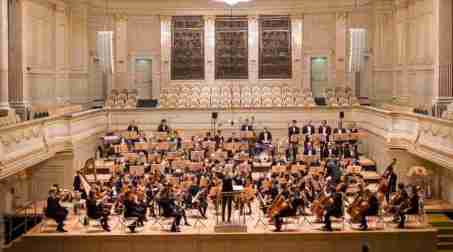
By Guilhermeduartegarcia - Own work, CC BY-SA 3.0