ISO 15288: Structure and clarity for the entire system life cycle

The international standard ISO 15288 defines processes for the entire system life cycle and is generally the standard for systems engineers: reason enough to dedicate a separate chapter to this standard at SE-Trends.
ISO 15288: Please be more precise
The correct designation of the current version of the standard is ISO/IEC/IEEE 15288:2023, with the last number (2023) referring to the year of publication. The prefix reflects the cooperation of three international organizations.
- ISO (International Organization for Standardization)An independent, non-governmental international organization with 167 national standards organizations as members. ISO develops and publishes international standards for a wide range of industries.
- IEC (International Electrotechnical Commission): A global organization that develops and publishes international standards in the field of electrical engineering and electronics.
- IEEE (Institute of Electrical and Electronics Engineers)A professional association based in the USA that develops standards in the fields of electronics, electrical engineering and information technology.
However, simply "ISO 15288" has become established as the "short form". The cooperation of these organizations in the development of ISO 15288 ensures broad international recognition and relevance of the standard in the field of Systems Engineering.
History of the standard
The development of ISO 15288 began in 1994 with the aim of creating a common framework for system life cycle processes. The first version was published in 2002. An update was made in 2008, which harmonized it with other standards such as ISO/IEC 12207 included. In 2015, the standard was revised in collaboration with IEEE and published as ISO/IEC/IEEE 15288:2015. The latest version, ISO/IEC/IEEE 15288:2023, was published in May 2023.
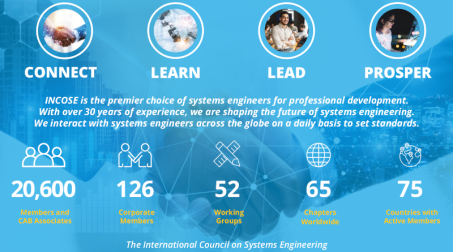
INCOSE (International Council on Systems Engineering) has been involved in the standard as an important technical partner since the 1990s. INCOSE supported the creation of the standard by providing technical and practical expertise and significantly influenced its content. To this day, INCOSE is actively involved in standardization committees, promotes the acceptance and application of the standard in the systems engineering community and helps to continuously develop it further. Particularly worth mentioning is the Systems Engineering Handbook and the Systems Engineering Vision 2035.
Content and area of application
ISO 15288 defines a framework of processes for the entire life cycle of a system, from conception through development to decommissioning. The processes are divided into four categories subdivided.
- Agreement Processes: regulate the relationship between client and supplier.
- Organizational Project-Enabling ProcessesSupport the organization in providing the necessary resources and infrastructure.
- Technical Management ProcessesConcerning the planning, monitoring and control of technical activities.
- Technical ProcessesDirectly relate to system development, including requirements analysis, design, implementation, integration, verification, validation, operation, maintenance and disposal.
While ISO 15288 covers the entire system life cycle, in reality we are dealing with a larger set of rules. (iso 9001 and 61508 as examples)
While ISO 15288 describes the entire system life cycle, in reality it does not stand alone, but is part of a framework of interconnected standards. These include, for example ISO 9001which defines the basic requirements for company processes as a quality management standard. The safety standard IEC 61508which is specifically geared towards functional safety, is of particular importance, as it ensures the Basis for further standards such as ISO 26262 (automotive) or EN 5012x (rail).
New features in ISO/IEC/IEEE 15288:2023
The 2023 version of the standard brings several important updates.
- Improvements in technical processesCustomization in areas such as business or mission analysis, system architecture definition, system analysis, implementation, integration, operation and maintenance.
- Enhancements in technical management processesOptimizations in risk management and configuration management.
- Updated terms and definitionsClarifications and additions to improve common understanding.
- New annex to MBSE: Introduction of guidelines for the application of MBSE practices.
Application recommendation for companies
Why ISO 15288 at all? Well, the Complexity and the standard helps companies to structure their processes clearly and manage them efficiently. This also increases the Competitiveness sustainably. At the same time, it helps organizations to meet regulatory requirements and Compliance requirements systematically and comprehensibly, which is particularly important in safety-critical or highly regulated industries.
To implement ISO 15288 effectively in our own company, we should proceed as follows.
- Process evaluationAnalysis of existing company processes and identification of gaps compared to the processes defined in the standard.
- Adaptation of the frameworkCustomized adaptation of standard processes to the specific needs and structures of the company.
- Training and sensitizationTraining employees in the principles and practices of the standard to ensure a common understanding and consistent application.
- Continuous improvementEstablishment of a mechanism for regular review and improvement of processes to ensure their effectiveness and efficiency.

Need help?
I help companies with the introduction of systems engineering
By implementing ISO 15288, companies can standardize their system development processes, improve communication between stakeholders and ultimately increase the quality and reliability of their systems.
Conclusion
ISO 15288 provides systems engineers with a comprehensive process model for the entire life cycle of systems. The continuous updates of the standard reflect the changing requirements and technologies in the field of systems engineering. Companies that apply this standard remain competitive and position themselves for structured and efficient system development.