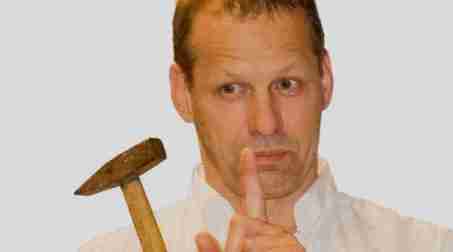
Interview with Dr. Siegmund Priglinger on the new modeling group

If the Gesellschaft für Systems Engineering (GfSE) forms a new working group, then it is worth taking a closer look. At the moment, the Formalize modelling working groupwhich was developed by Dr. Siegmund Priglinger was co-founded.
Dr. Priglinger has more than 30 years of experience as a product and solution provider, university lecturer, IT manager and management consultant for ICT in various sectors (industry, trade, telecommunications, IT, energy, healthcare, finance, public). He is the contact person for management, specialist departments and IT in all matters relating to improvements in information management, decision-making and systems engineering.
You recently co-founded the "Formalizing Modelling" working group (WG MF) at the GfSE and act as coordinator. What is the aim of the working group?
The aim of the MF working group is to equip the next generation of modeling languages such as SysML/v2 with a more precise syntax and semantics in order to avoid ambiguities, thus enabling a precise representation of concepts and the automated mapping of models to each other. In addition, the formal requirements for the mappability and integration capability of modeling languages such as CAD/CAM, PDM and SysML are to be investigated and developed. In contrast to the current state, it must be possible to derive these modeling languages from a "well-formed" logical formalism so that a model designed in this way can be precisely analyzed and formally checked. This also means that the model can be validated and checked for logical consistency. This makes it possible to answer questions such as: "Is a combination of constructs logically complete?", "Which combinations of constructs are permissible?", "What effect do changes in the requirements and in the design have on the model?", "How does a misbehavior propagate in the system?", etc.
Modeling Formalism" is a high-priority topic at the OMG.
The MF WG also aims to play an active role in the OMG's standardization activities relating to SysML/v2. There, "Modeling Formalism" is a high-priority topic. All of this takes place in close coordination with the other GfSE WGs, whose requirements must be incorporated into the MF WG and vice versa.
Bringing the syntax of different models together is certainly not too difficult. But how can we ensure that the semantics match? Do you already have any ideas?
Unfortunately, the syntax itself is not that easy. We have to go a little deeper. Models are described using languages. There are at least two types of language: G(raphical) languages and S(tring) languages. And modeling languages are practically always mixtures of these. UML, for example, is a mixture: it is initially a GL, but has parts of an SL in it due to the OCL. Examples of pure SLs are our usual programming languages. The G-Language LABView from National Instruments is completely represented in the background by an S-Language and represents the ideal case: G-Language S-Language.
And this brings us to the "fundamental problem" of most modeling languages: they are not languages.
And this brings us to the "basic problem" of most modeling languages: they are not languages, but only notations and these are still notation mixtures of GL and SL parts. These include UML and derivatives such as SysML, then BPMN (BPEL is an exactly defined S-Language, hence the problem of translating to and from BPMN!!!), and others. To understand this, you need to know that G-Languages such as UML are described by several metamodel levels (== schemas of data models), whose meaning is not defined in some places by a separate semantic language (with strict syntax and semantics), but by "free text" with possibly not clearly defined terms. S-Languages, on the other hand, are defined by a syntax (usually defined using EBNF) and by a clearly assigned and clearly defined semantic language for the syntax elements. This is why it is often referred to as an "attributed grammar". All of these terminologies are tried and tested, formally validated and have long been used in the field of "translator/compiler construction". If models are therefore mapped using a language, the transformation into another language means "translating", i.e. mapping, the "syntax+semantics of language 1" into the "syntax+semantics of language 2". Mapping "syntax to syntax" alone therefore makes no sense.
Trying to map fuzziness into fuzziness leads to fuzziness. The only way to improve this is to turn the notations into languages.
Now, as already mentioned, many of our modeling languages are not so precisely defined, similar to our human languages. In addition, the implementations in the tools vary because the language specification leaves room for interpretation. This means that a transformation from language to language or from tool to tool is not clearly possible. The only way to improve this is to turn the notations into languages, i.e. to sharpen their terminology and the respective rule system (== syntax and semantics). In short: "Trying to map fuzziness into fuzziness leads to fuzziness."
The topic of model integration is a very exciting one. Are there already ideas on how this will be implemented in practice later on? In particular: will open standards such as OSLC come into play here, and should tool manufacturers be recruited?
The OSLC specifies something like "meta-models" or "meta-languages". However, this does not solve the problem of "fuzzy languages". And since model integration means mapping models to each other, i.e. "matching" and "mapping" schemas, i.e. comparing and assigning "syntax+semantics" again, we will not be able to avoid working on the basis of the problem: Turning modeling notations into languages. Otherwise, the automation of communication in the areas of IoT and Industry 4.0 will remain a pipe dream.
Of course, the tool manufacturers play an important role. They are also interested in ensuring that their language implementations are as "exact" as possible. Especially the tool manufacturers who have a whole suite of modeling tools such as CAD, PDM or SE and have to quickly master the transformation problem and the overarching language view.
Last question: What are the planned activities in the coming months, and how can interested parties get involved?
In the MF working group, we examine the language specification of SysML (and also other methods) and their implementation in the various tools using examples of their formal and practical strengths and weaknesses. I would like to discuss an example of this approach in a tutorial at TdSE 2016.
We also need to develop the necessary methods for analyzing strengths and weaknesses. In doing so, we will not be able to avoid resorting to fairly formal (== mathematical) methods that have already been developed or are in progress. On the one hand, this requires an interest in this conceptual world; on the other hand, our group must also establish itself as a translator between the conceptual worlds of the "standardizers", the "users" and the "formalizers".
The group must establish itself as a translator between the conceptual worlds of the "standardizers", the "users" and the "formalizers".
We would be delighted if we could get as many active members as possible. As we are provided with some resources by the GfSE as an association and act as a working group of the GfSE, we would ask that those interested in the MF working group inform the association of their interest. GfSE to join. This has many other advantages, such as global networking on the topic, etc. And together we can also exert our influence more effectively in other bodies.