5+1 suggestions for improvement for the German automotive industry
The automotive industry is of great economic importance in Germany and was the world leader until recently. But this is changing, driven by electrification, autonomous driving and the general trend towards software-defined products. Nothing new so far.
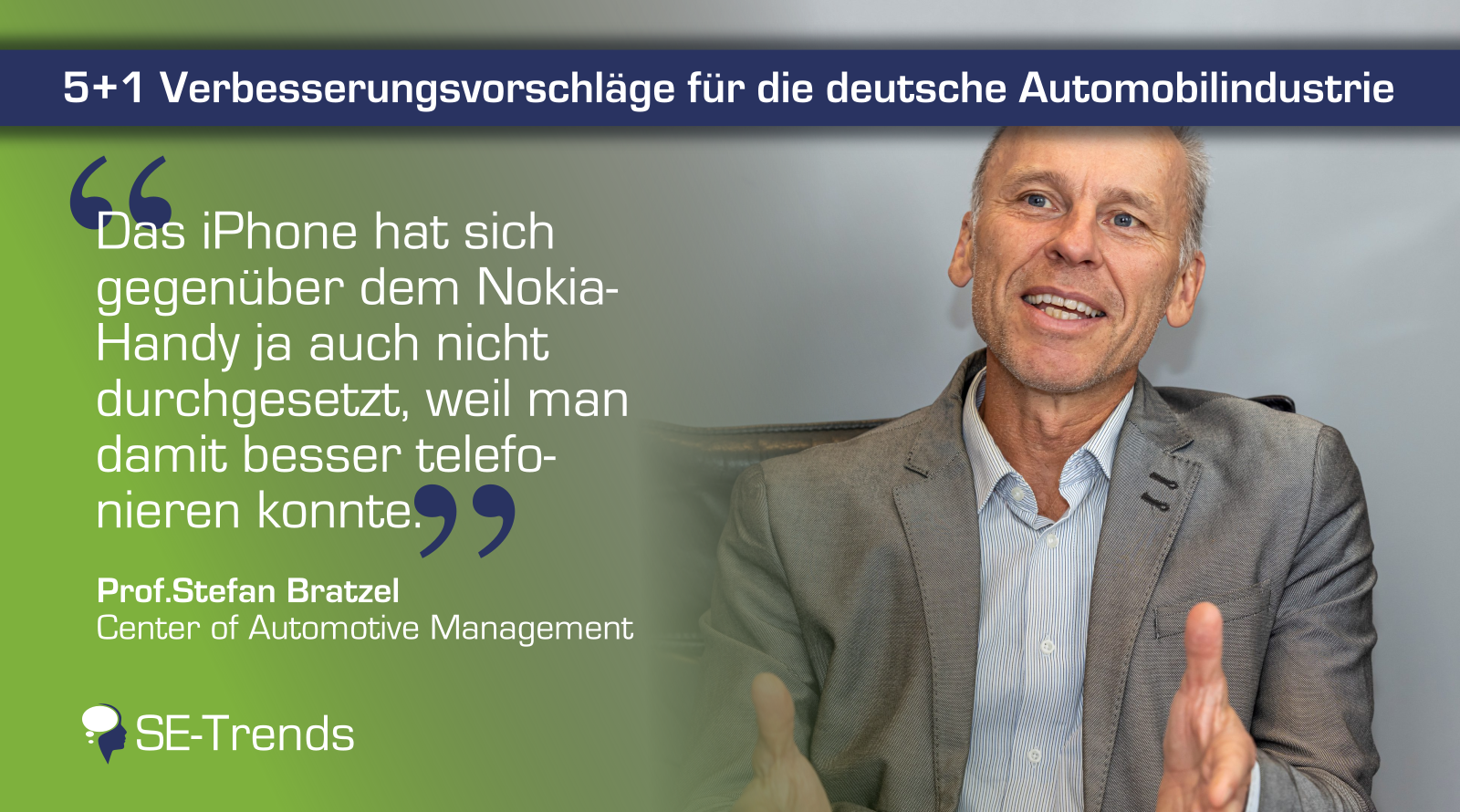
How we should deal with this, however, is another question. Professor Stefan Bratzel from the Center of Automotive Management has come up with 5 suggestions for improvement. I would like to add a 6th to these.
Center of Automotive Management
The Center of Automotive Management (CAM) was founded almost 20 years ago, in 2004. It sees itself as an independent, scientific institute that deals with the economic issues of the automotive industry.
The CAM was founded by Professor Stefan Bratzel, who now has a good reach with his institute and is quoted in the media. Also on LinkedIn with regular messages active.
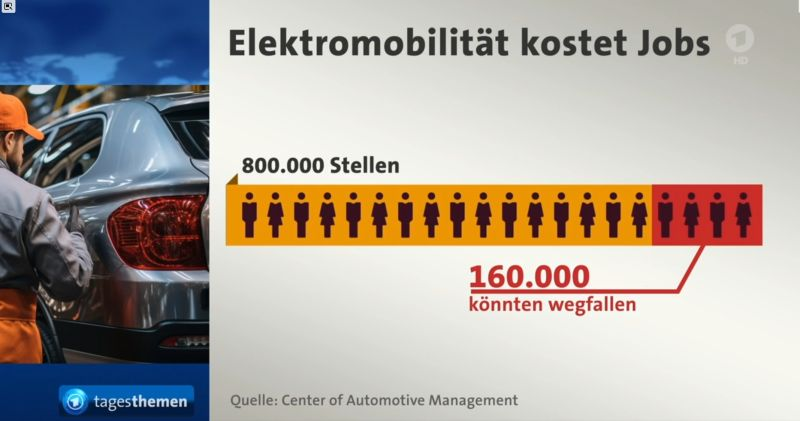
He describes his suggestions for improving the automotive industry in detail in a Guest article in the Handelsblatt. These are:
Suggestions for improvement for the automotive industry
Here is my personal summary of the 5 suggestions for improvement and a 6th from me:
1. we need affordable small electric cars!
The largest margins can be realized in the high-end segment, and this is where we find most models from German manufacturers. On this list of small electric cars from the ADAC only two German models are listed, VW e-up! and Opel Corsa-e (identical to Peugeot e-208). I have left out the 2-seater Smart here.
However, this segment is important for tapping into the mass market. Furthermore, such models must also be able to keep up with combustion engines in terms of price.
Personal experience: When looking for my next vehicle, I only found five electric vehicle models that fit into my rather narrow city garage in terms of width (with an acceptable range). Two of them were identical.
Michael Jastram
2. commercial customers are the way into the e-mass market
In Germany, new cars are mainly bought commercially, while private vehicles tend to be bought second-hand. There should therefore be appropriate incentives for commercial vehicles in particular to opt for electric vehicles. This is an area that has so far been neglected by politicians. Specifically, Prof. Bratzel proposes giving preference to electric vehicles in company car taxation.
3. gasoline must become more expensive, green electricity cheaper
Energy costs are another factor. This need not (and should not) be specific to the automotive industry. We already have a mechanism that makes green energy sources more attractive, reduces CO2-trade. This would create technology-neutral incentives, which would indirectly increase the demand for e-cars.
4. reliable charging infrastructure
To be fair, it has to be said that a lot is happening in terms of expanding the charging infrastructure. More problematic here is the Payment chaosalthough many things have also improved drastically here in recent years.
Nevertheless, the simplicity and transparency that we know from filling up with gasoline is missing today.
5. an e-car is a new product
The Gulf War in the 1990s had driven up energy costs, which at the time led to a The renaissance of electric cars led to this. However, this came to nothing, as many manufacturers simply replaced the engine block of a combustion engine with an electric motor. First Tesla has proven that although an electric car is related to the combustion engine, it is still a different product.
Prof. Bratzel provides a number of keywords on this topic: cross-vehicle charging ecosystem, bidirectional charging or energy self-sufficiency. We in systems engineering in particular should unleash our imagination to make the electric car a System of Systems to perceive.
5+1. Innovation requires competition for the top dogs
Here is my personal 6th point: German OEMs and suppliers are under enormous pressure. But is this enough to achieve the transformation? Even if billions are invested, innovation is difficult for a large corporation. We recently saw this at Cariad seen.
The drivers of innovation have always been entrepreneurs, not corporations. That's why many corporations also bring innovation in-house by buying up start-ups. And in my opinion, this is where there is a huge problem. At least five years ago, the figures were frightening:
invested in automotive start-ups in the 7 years from 2011 - 2018:
Florian Nöll, Chairman of the Executive Board of Bundesverband Deutsche Startups e.V., from15:05
- Germany approx. USD 1 billion
- USA: USD 56 billion
- China: > USD 30 billion
The USA shows how things can work instead: In addition to Tesla Cruise an impressive example of an innovative start-upthat is shaking up the market. Cruise now belongs to General Motors (GM).
Conclusion
There is a lot to do, but it is already clear that the German car has lost its dominance in the world. Stefan Bratzel's suggestions for improving the automotive industry are valid and if (!) they are implemented correctly, they will help to slow down this process somewhat.
Personally, I think it is more important to focus on what can sustain Germany as a business location in the long term: This is not a single industry, but the people in this country, above all entrepreneurial people.
Image source: CAM